01
Cognitive Accessibility
Reduce working-memory demands through plain language, one clear action at a time, and recognition over recall.
Human–AI interaction
MIRA
A calm daily assistant built around dignity, cognitive accessibility, and earned trust.
Explore the thesis01The core thesis
Most AI products reward speed, novelty, and dense interaction. For older adults, those assumptions can create invisible barriers: shifting interfaces, unclear system intent, fragile memory demands, and interactions that feel more corrective than supportive.
MIRA reframes assistance through Calm Technology. Instead of competing for attention, it stays at the periphery, enters at the right moment, communicates in familiar language, and always leaves agency with the person.
02Design principles
Reduce working-memory demands through plain language, one clear action at a time, and recognition over recall.
Make intent, timing, and data use visible before assistance appears—then keep every suggestion easy to question or dismiss.
Learn the rhythm of daily life without taking control. Surface support quietly, at moments that already feel natural.
03Multi-scenario exhibition
Storyboards test how the same principles scale across changing contexts without changing the relationship between person and assistant.
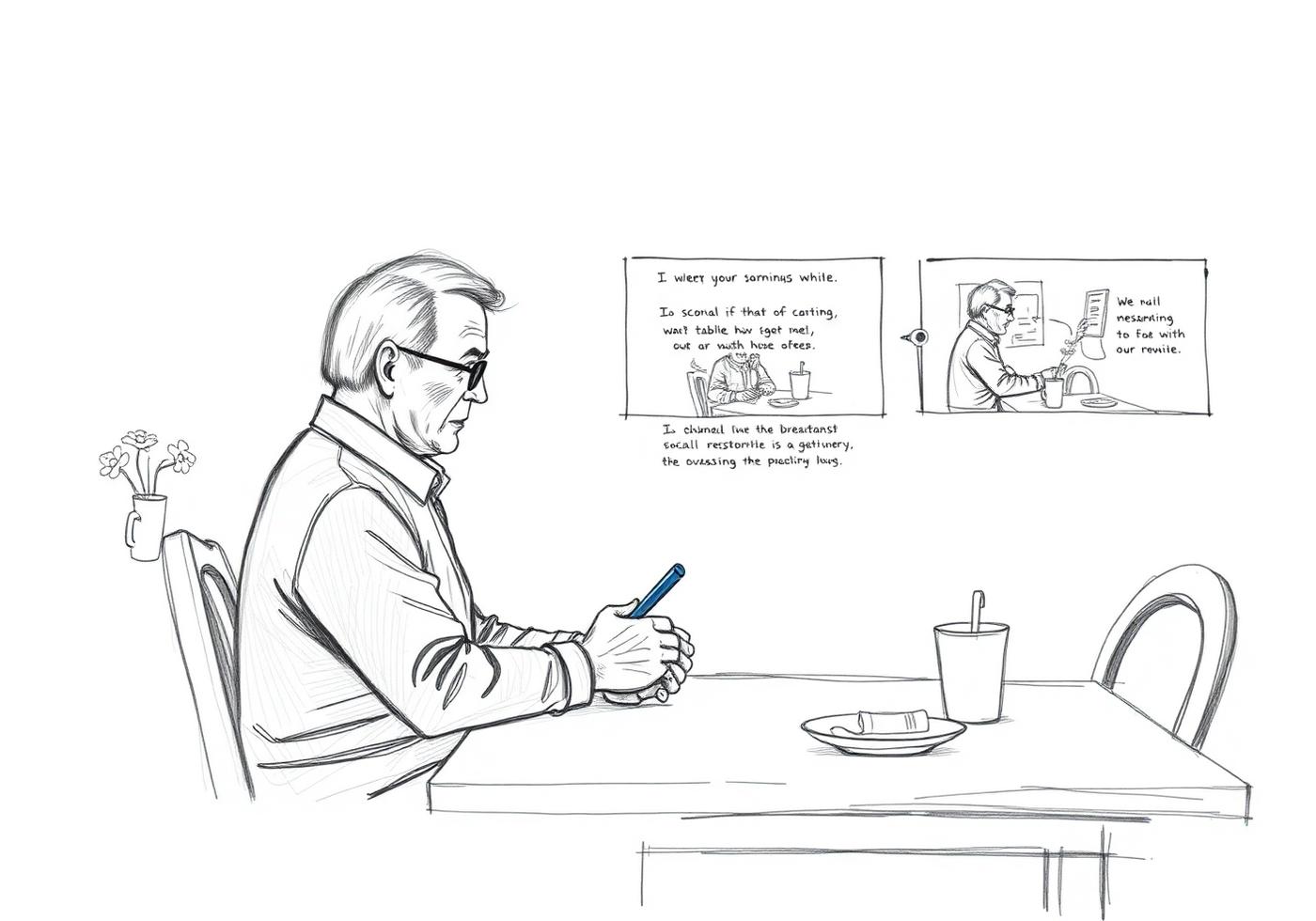
01 · Morning rhythm
MIRA fits medication and meal prompts into an existing breakfast routine, offering one calm cue and waiting for consent before continuing.
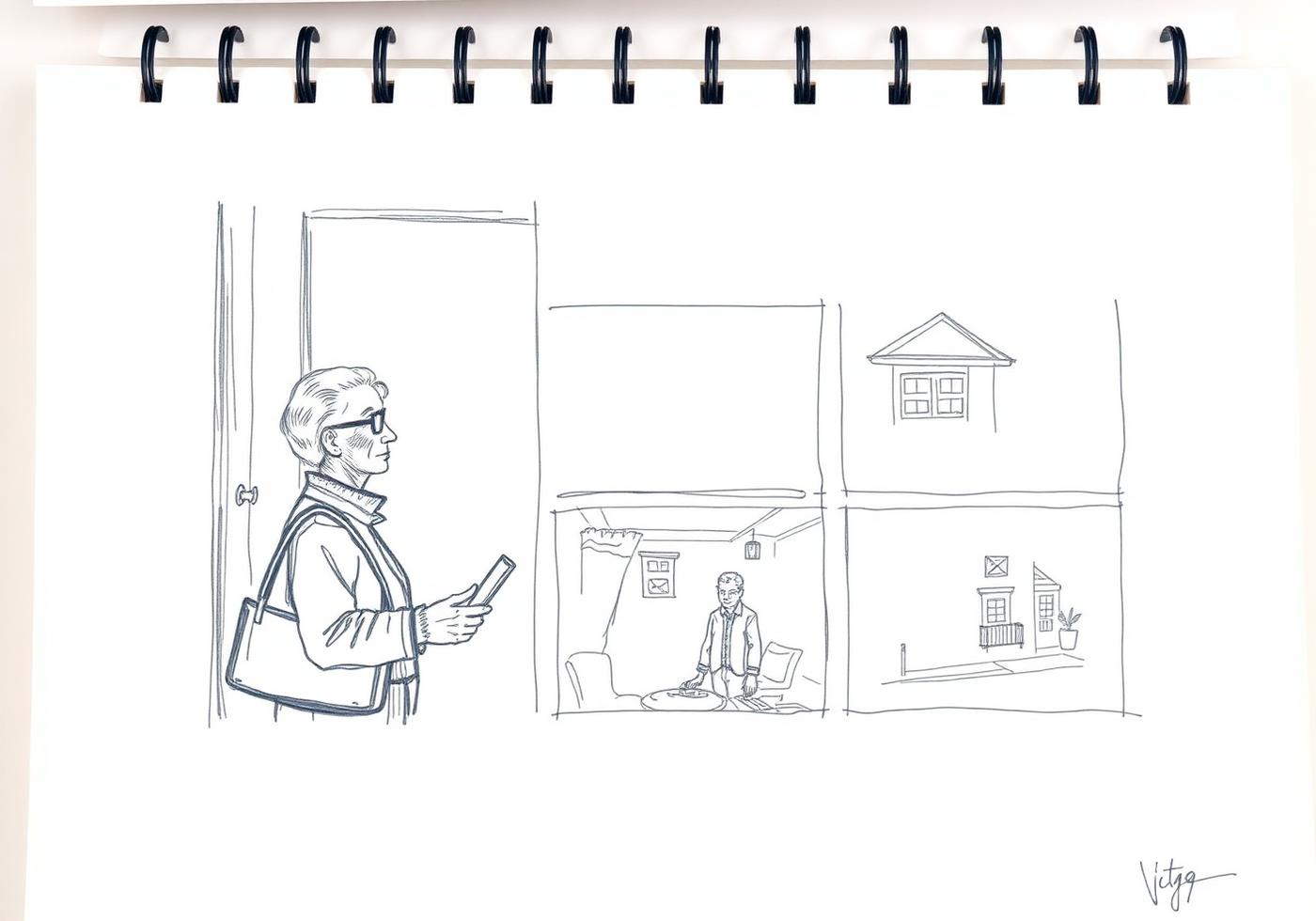
02 · Out in the world
Before an outing, the same system shifts from home routine to lightweight wayfinding—preserving familiar language and interaction patterns.
03 · Evening connection
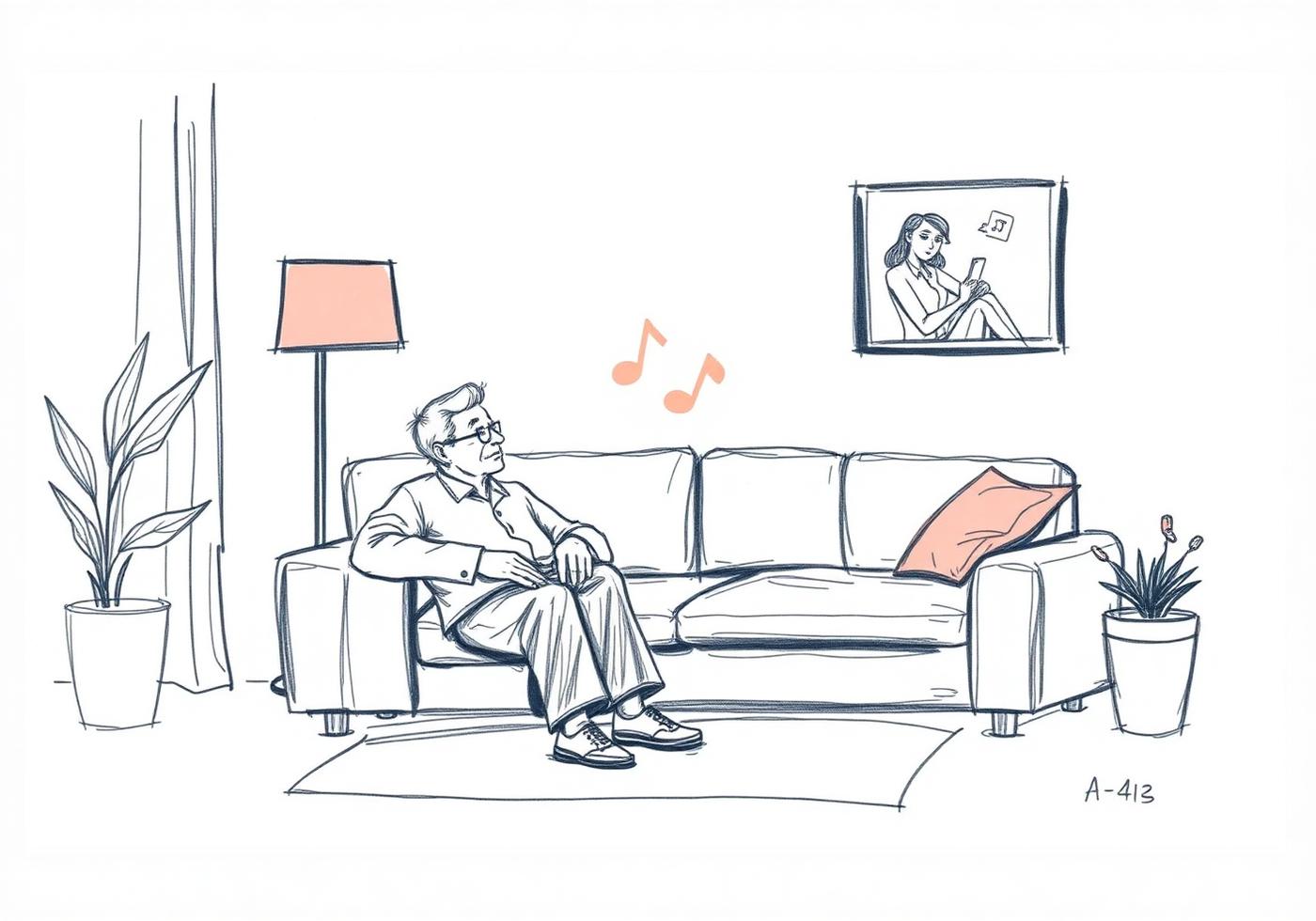
Ambient assistance supports social connection and tomorrow’s planning, then recedes so technology never becomes the center of the room.